

Composite bonding before and after photos are often the first thing patients look at when weighing up whether the treatment is right for them.
The transformations can be dramatic – chipped edges smoothed, gaps closed, short teeth lengthened, stained enamel covered – and all in a single visit with no drilling and no anaesthetic in most cases.
Composite bonding has become one of the most popular cosmetic dental treatments in the UK because it is fast, reversible, and far cheaper than porcelain veneers. The results depend heavily on the skill of the dentist, the layering technique used, and how well the shade is matched to your surrounding teeth.
If you are considering composite bonding and want to understand what kind of results are realistic, this guide shows what bonding looks like before and after, explains what it can fix, compares it to veneers, and covers the key factors that affect your long-term outcome so you can decide with confidence.
What Can Composite Bonding Fix?
Composite bonding uses tooth-coloured resin applied directly to your teeth to correct a range of cosmetic issues. The resin is sculpted by hand onto the tooth, shaped to match the surrounding teeth, then hardened with a UV light. Because nothing is removed from the underlying tooth, the treatment is fully reversible and can be repaired or refined later if your needs change.
Bonding is most often used for cosmetic concerns that fall short of needing veneers or crowns – smaller corrections that can be completed in a single visit without drilling or anaesthetic. The treatment works well on front teeth where biting forces are lower and aesthetics matter most, and is one of the most affordable cosmetic options in UK dentistry.
The most common cosmetic issues bonding can fix include:
- Chipped or cracked teeth – the most common use, repairing visible damage
- Small gaps between teeth – closing spaces without braces or veneers
- Uneven or misshapen teeth – reshaping for a more uniform appearance
- Discolouration – covering stains that whitening cannot remove
- Short teeth – adding length to teeth worn down over time
- Rough or uneven edges – smoothing and refining the tooth outline
The results are immediate. Unlike veneers or crowns which require lab fabrication, bonding is sculpted directly onto the tooth by your dentist in a single visit.
Composite Bonding Before & After: Real Cases
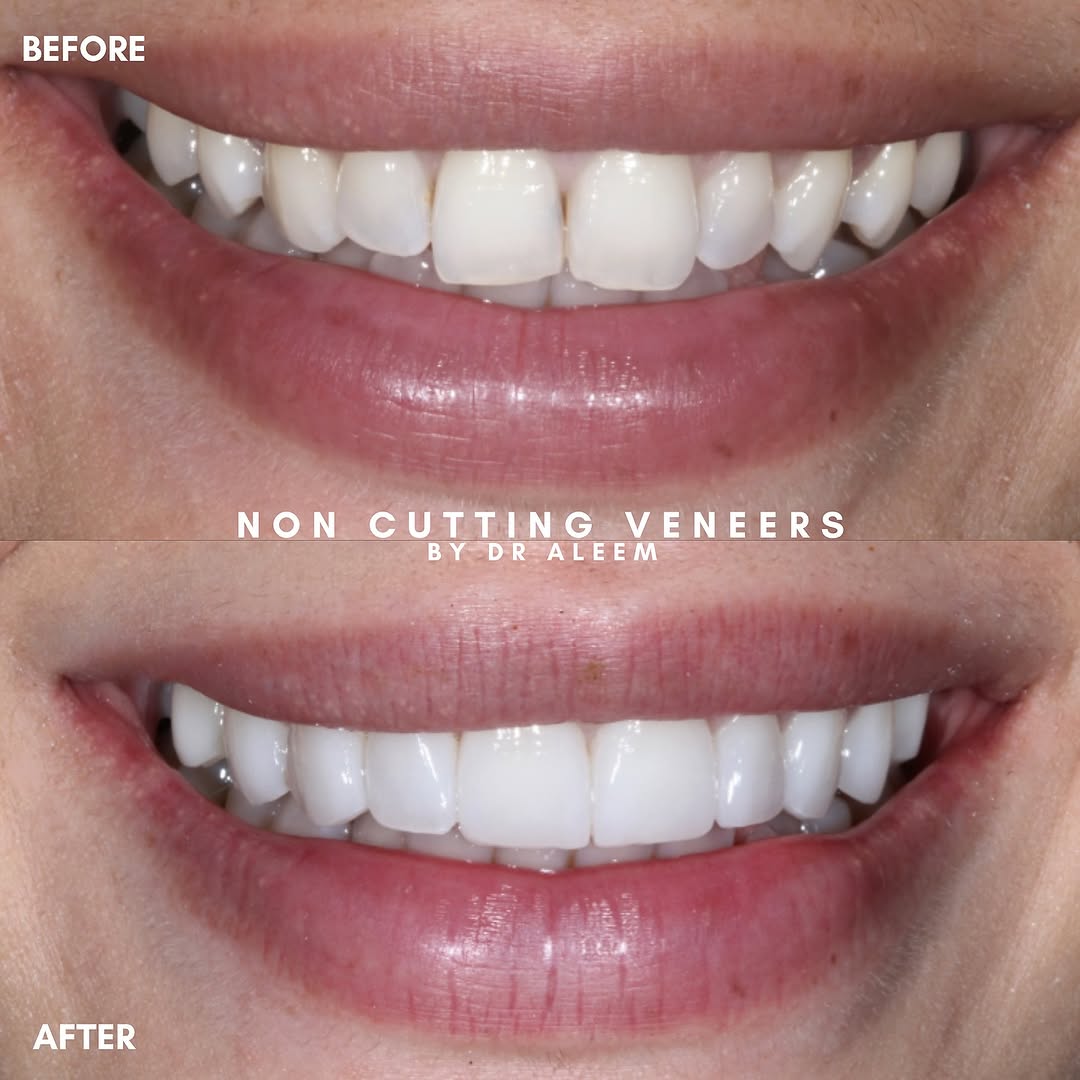
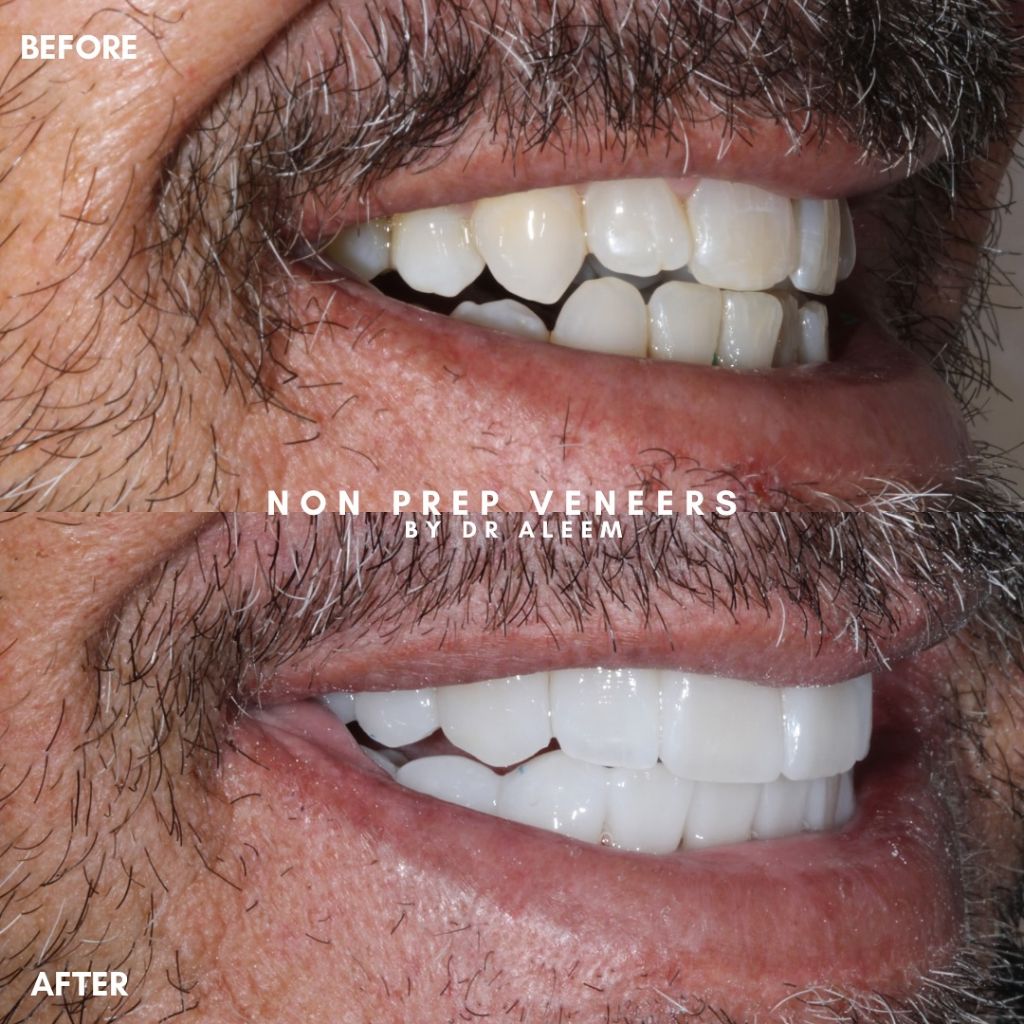
The kind of transformation composite bonding delivers depends entirely on what is being corrected. The two cases below show genuine results from Dental Artistry patients – each one demonstrates how the same underlying treatment can be tailored to a different starting point and a different goal.
Composite Bonding Case 1 – Closing Gaps & Improving Symmetry
Before Treatment The patient presented with visible spacing between the upper front teeth, along with uneven edges and mild misalignment. This created an inconsistent smile line and affected the overall balance of the teeth.
Our Approach We used advanced composite bonding techniques to carefully build and reshape the teeth. Each tooth was individually sculpted to improve proportions, close the gaps, and create a more harmonious alignment, all while preserving the natural tooth structure.
After Treatment The result is a fuller, more symmetrical smile with smooth, even edges. The gaps have been completely closed, and the teeth now appear straighter and well-balanced, maintaining a natural and subtle aesthetic.
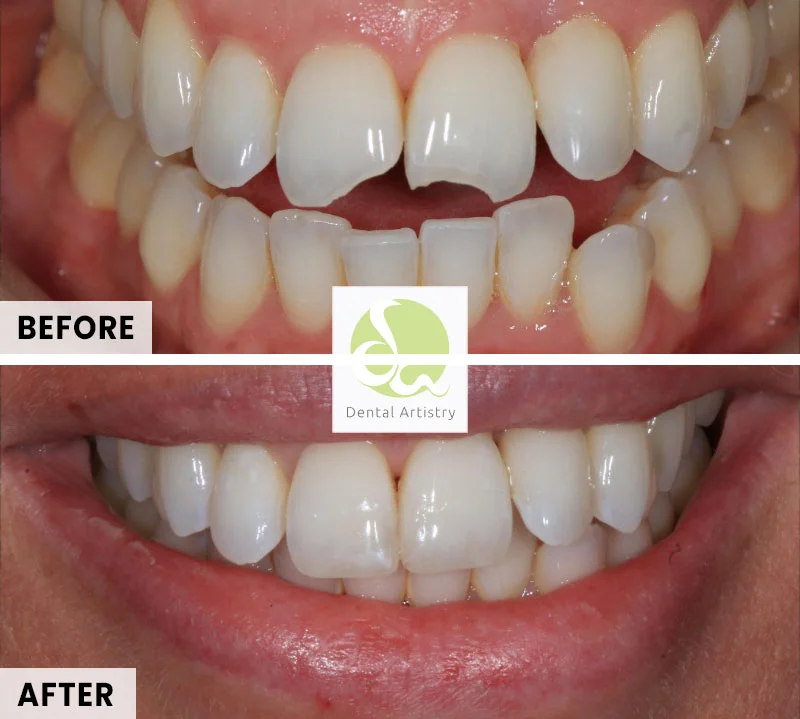
(Before & After – Case 1: composite bonding closing gaps and improving symmetry across the upper front teeth at Dental Artistry)
Composite Bonding Case 2 – Enhancing Shape, Size & Overall Balance
Before Treatment The patient had noticeable gaps, uneven tooth sizes, and irregular contours across the front teeth. This resulted in a smile that lacked uniformity and definition.
Our Approach Using precision composite bonding, we enhanced the shape and size of each tooth to achieve better symmetry. The treatment focused on closing spaces, refining contours, and creating a consistent smile line tailored to the patient’s facial features.
After Treatment The smile is now brighter, more uniform, and aesthetically refined. The teeth appear evenly shaped and aligned, with improved proportions that create a natural yet noticeably enhanced result.
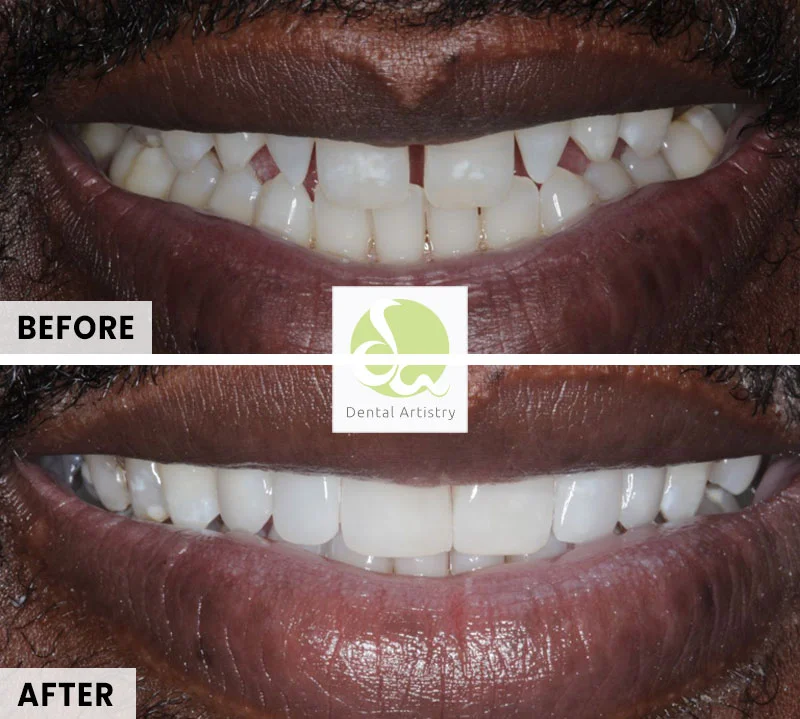
(Before & After – Case 2: composite bonding enhancing shape, size and overall balance on the upper front teeth at Dental Artistry)
For more genuine patient cases across gap closure, chip repair, tooth alignment and edge refinement, see our full composite bonding before & after gallery.
Expert Tip: The most natural bonding results come from dentists who take time to layer multiple shades of composite resin. A single flat colour looks artificial. Ask your dentist about their layering technique during your consultation.
How Long Does Composite Bonding Last?
Composite bonding typically lasts 5 to 10 years with proper care, and in well-maintained cases the result can hold up for longer. Longevity is one of the trade-offs against porcelain veneers, which often last 10 to 20 years – but bonding’s biggest advantage is that any wear, chipping, or staining can be repaired or refreshed easily, without removing the underlying tooth structure.
How long your bonding actually lasts depends on a handful of practical factors. Where it sits in your mouth matters, as does what you eat, drink, and bite on. Daily oral hygiene and regular professional cleaning extend the life significantly, while heavy stainers like coffee or red wine can shorten it. Material quality also plays a role – premium composite resins layered properly outlast budget options.
The factors that most affect composite bonding lifespan:
- Location – bonding on front teeth (lower bite forces) lasts longer than on biting surfaces
- Oral habits – biting nails, chewing ice, or opening packaging with teeth shortens the lifespan
- Oral hygiene – regular brushing and professional cleaning keeps the bonding in good condition
- Staining habits – coffee, tea, red wine, and smoking can discolour composite over time
- Material quality – premium composite resins last longer than budget options
Unlike porcelain veneers, composite bonding can be easily repaired or replaced without damaging the underlying tooth. This makes it a low-risk option that can be updated as needed. For patients comparing bonding to a full cosmetic transformation, our guide on the full set of veneers cost in the UK walks through what a complete smile makeover involves.
What Happens During the Bonding Procedure?
The composite bonding procedure is one of the most straightforward cosmetic dental treatments. There is no drilling required in most cases, no anaesthetic, no temporary restorations, and no waiting for lab work. The entire process happens in a single visit, with the dentist sculpting the resin freehand onto each tooth and curing it with a UV light.
A typical case takes 30 to 60 minutes per tooth depending on the complexity. The skill is in the layering – good cosmetic dentists build up multiple shades of composite to mimic the natural translucency of enamel, then polish the final result so it blends seamlessly with the surrounding teeth. Here is exactly what to expect step by step:
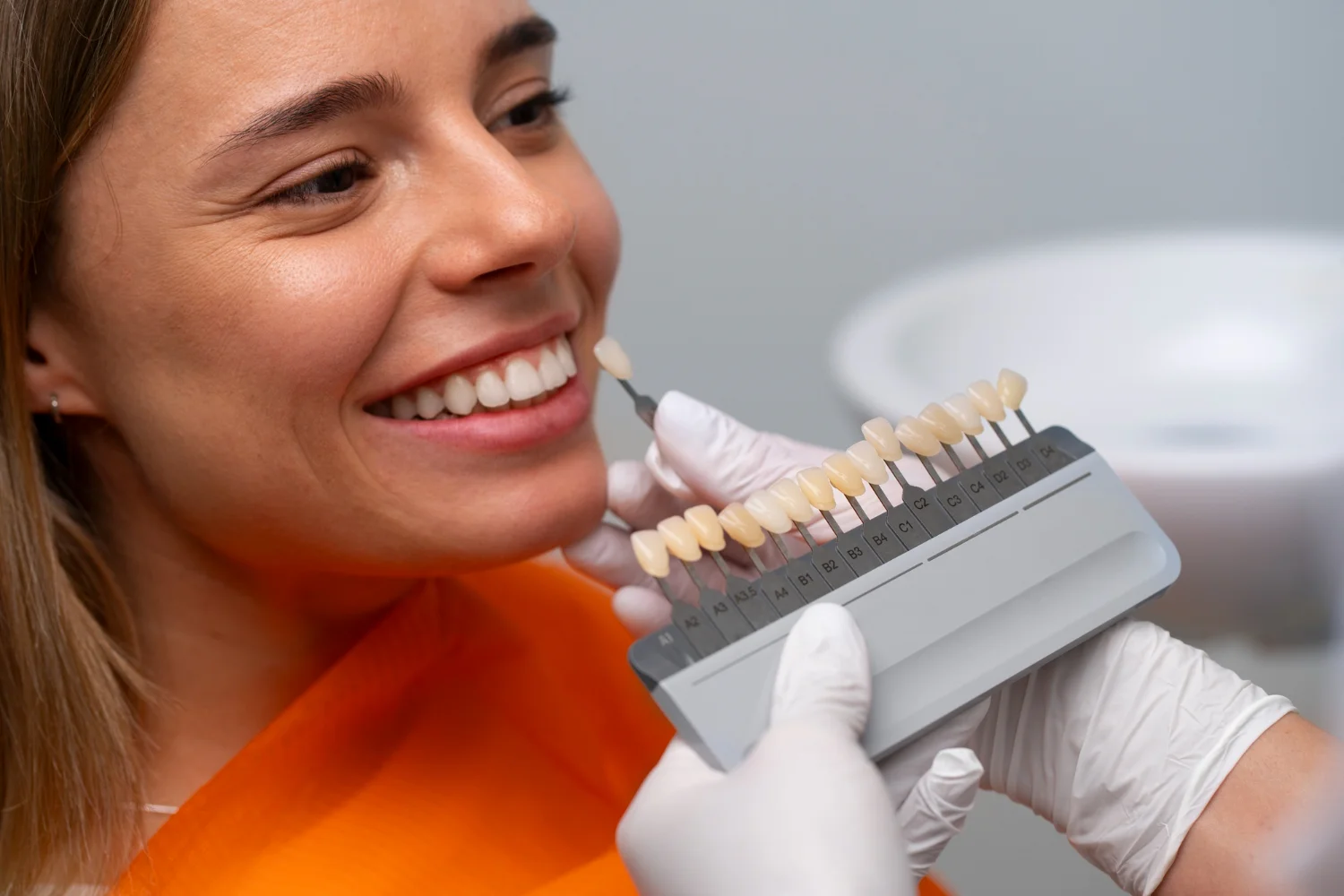
1. Shade matching – your dentist selects composite resin colours that match your natural teeth
2. Tooth preparation – minimal roughening of the tooth surface to help the bonding material adhere. No drilling or anaesthetic needed in most cases
3. Application – the composite resin is applied in layers, with each layer shaped to build the desired form
4. Curing – a UV light is used to harden each layer before the next is applied
5. Shaping & polishing – the final shape is refined and polished to a smooth, natural finish
You leave the appointment with your completed result. No temporary restorations, no waiting for lab work, no second visit required.
Frequently Asked Questions – Composite Bonding Before & After
Below are the questions patients ask most often when considering composite bonding for the first time. If your specific question is not covered here, a cosmetic consultation is the fastest way to get a clear answer based on your teeth and what you want to achieve.
Does composite bonding look natural?
Yes, when done by a skilled dentist using layered application. The composite should match the colour, translucency, and texture of your natural teeth. Poor bonding can look flat or opaque, so choosing an experienced cosmetic dentist matters.
Can composite bonding stain?
Composite resin can absorb stains from coffee, tea, and red wine more readily than porcelain. Regular professional polishing helps maintain the colour. Avoiding heavy staining agents immediately after treatment is recommended. If existing stains are your main concern rather than shape or chips, Enlighten teeth whitening is often a better starting point than bonding.
Does getting bonding hurt?
No. In most cases, composite bonding requires no anaesthetic because no drilling is involved. The tooth surface is gently roughened, which is painless.
Can bonding be removed?
Yes. Composite bonding can be removed without damaging the natural tooth underneath. This reversibility is one of its key advantages over veneers.
How much does composite bonding cost?
UK prices typically range from £150 to £450 per tooth depending on complexity and the dentist’s experience. At Dental Artistry, bonding starts from £350 per tooth.
Can I get bonding on my bottom teeth?
Yes. Bonding can be applied to any tooth, though it is most commonly used on the upper front teeth. Lower front teeth can also benefit from edge bonding to create a more even appearance.
Composite Bonding in North London
If you are interested in composite bonding and want to see what results are possible for your smile, Dental Artistry in North London offers cosmetic bonding consultations with experienced cosmetic dentists. Our team can assess your teeth, discuss your aesthetic goals, and show you before and after examples from previous cases. With bonding from £350 per tooth, a noticeable smile improvement is both accessible and achievable.
If bonding is not the right long-term fit for your case, our guide on how much porcelain veneers cost covers the full range of options, including no-prep porcelain veneers, that we can talk through at your consultation.
Book your cosmetic consultation today
Composite Bonding Before & After: What to Remember
Composite bonding has become one of the most popular cosmetic dental treatments in the UK, and the before and after transformations speak for themselves. Chips, gaps, worn edges, and discolouration can be corrected in a single visit without drilling or injections. The results are immediate, reversible, and far more affordable than veneers.
What makes bonding stand out is how much it can change a smile with so little intervention. Because no enamel is removed, the treatment is fully reversible and can be refined or replaced over time. The quality of the outcome depends heavily on the skill of the dentist, the layering technique, and the shade matching to surrounding teeth.
Here are the essential points every patient should remember:
- Fixes chips, gaps, discolouration, and uneven edges without drilling or anaesthetic
- Results are immediate and completed in one visit
- Cost is £250 to £450 per tooth making it one of the most affordable cosmetic treatments
- Lasts 5 to 10 years and can be easily repaired or replaced
- Conservative and easily refined because the underlying tooth is not altered, bonding can be repaired or replaced over time
- Natural appearance depends on the skill of the dentist and the layering technique used
If you want to improve your smile without committing to permanent changes, composite bonding is an excellent starting point. A cosmetic consultation will show you what is realistic for your teeth and give you a clear sense of the before and after you can expect.
Because bonding is so accessible, many patients use it as a first step before deciding whether to explore longer-lasting options like veneers down the line. It is low-risk, cost-effective, and one of the fastest ways to refresh a smile.
Information Sources
Smile Makeover with Direct Composite Veneers (PMC Case Study)
Cosmetic Dental Treatment Overview (Oral Health Foundation)
Longevity of Posterior Composite Restorations (PMC Systematic Review)







You must be logged in to post a comment.