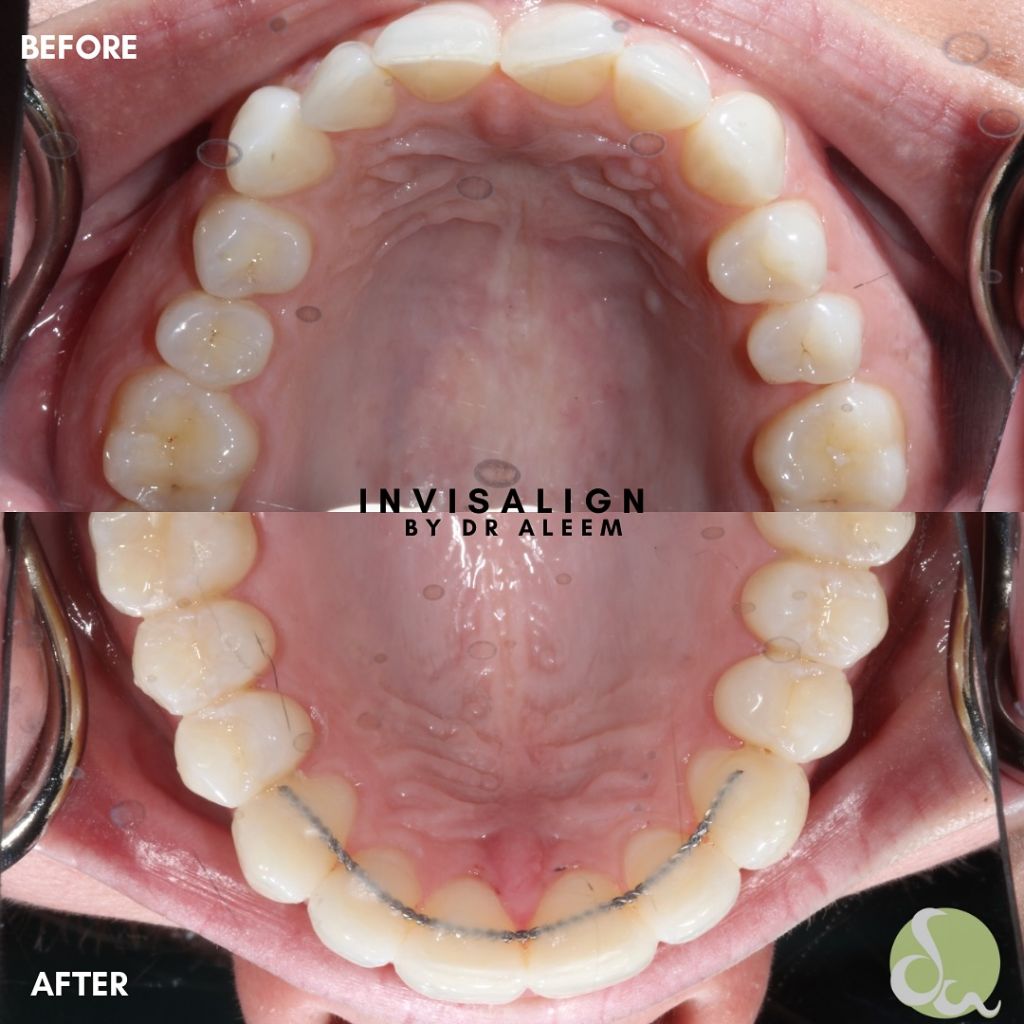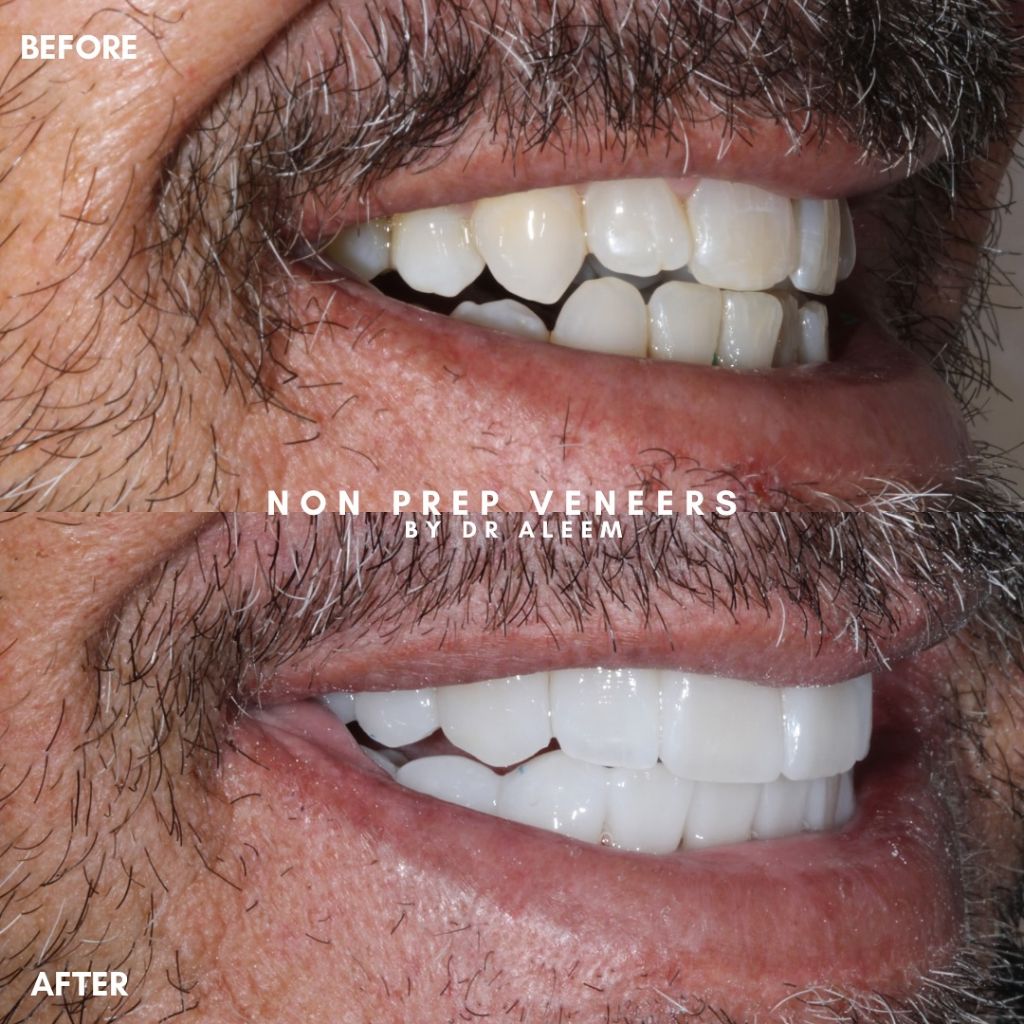

Tooth edges wear down over time, and many patients first notice the change in photographs rather than in the mirror.
Whether from grinding, everyday use, or a small chip, the incisal tips of front teeth can lose their shape. Composite edge bonding rebuilds worn or chipped edges using tooth-coloured resin, often without drilling or injections. The result is usually visible the same day.
This guide explains what edge bonding is, and how it differs from full composite bonding and porcelain veneers. It also covers who it suits, what the procedure involves, and what to expect from longevity, repairability, and cost.
What Is Composite Edge Bonding & How Is It Applied?
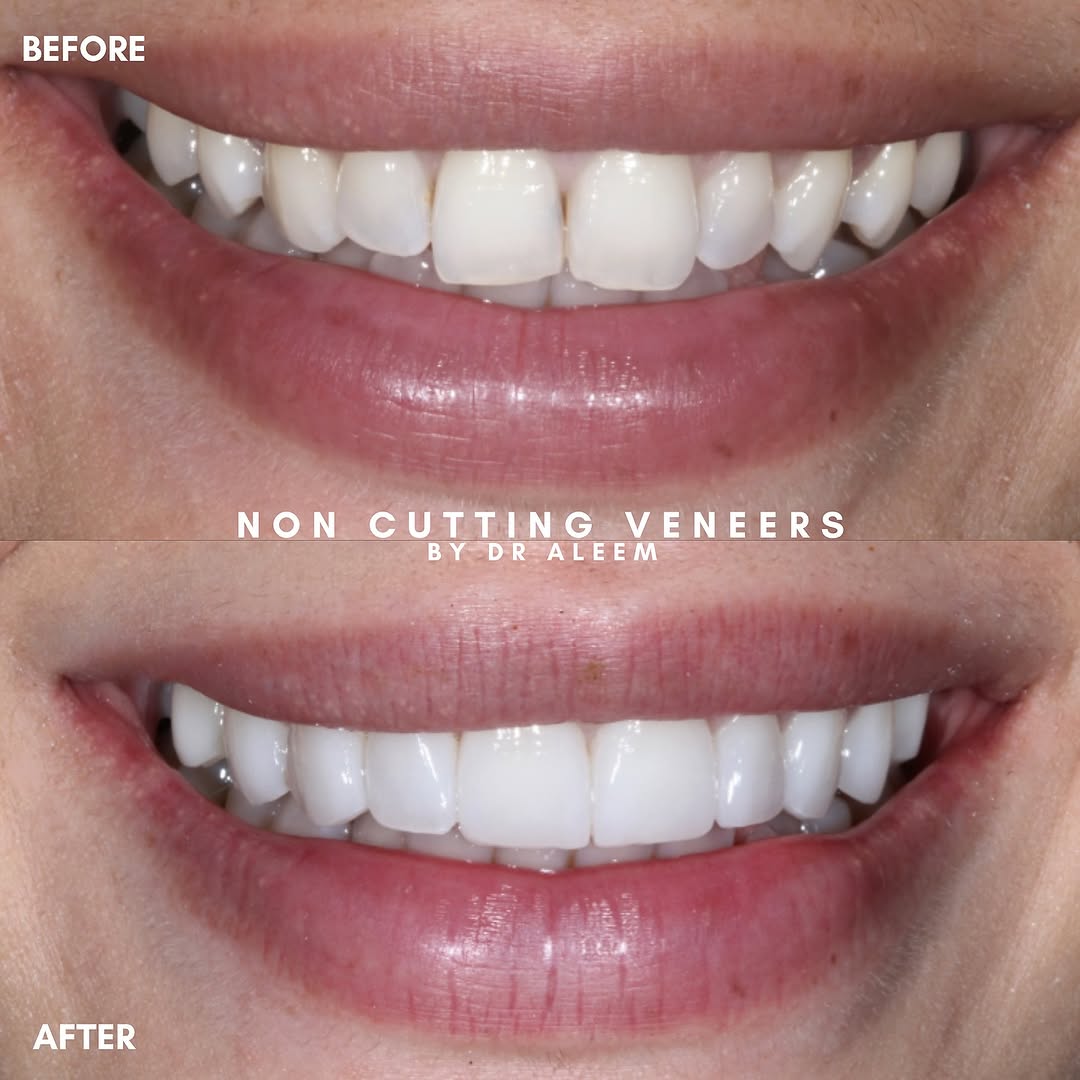
Composite edge bonding rebuilds the worn or chipped tips of front teeth using composite resin. Unlike full composite bonding, which covers the entire visible tooth surface, edge bonding targets only the incisal edge. It restores the length and shape lost through wear or minor trauma.
The treatment suits patients who notice their front teeth look shorter, uneven, or chipped. Common candidates include those with mild edge wear from grinding, small chips from everyday biting, or minor asymmetry between teeth. Because no enamel is removed in most cases, composite edge bonding is considered reversible, which makes it a sensible first step. A 2023 Dentistry Journal scoping review of anterior composite restorations reports strong survival for localised tooth wear: around 95.6 percent at two years and 88.6 percent at five years.
Expert Tip: If you grind at night, raise this with your dentist before booking edge bonding. Bruxism places repeated force on incisal edges and can shorten composite longevity considerably. A night guard is often the sensible first step.
Edge bonding is completed in a single appointment, usually without anaesthetic. A shade-matched composite resin is built up in thin layers, each one cured under a UV light. This layering, as the British Society for Restorative Dentistry explains, produces natural translucency and durability. The dentist then sculpts and polishes the edge to shape. Most patients leave with visible results the same day.
Who Is Composite Edge Bonding Suitable For?
Edge bonding works best when the wear or damage is limited to the biting edges of the front teeth. It is less suited to problems spread across the whole tooth surface. The most common candidates are adults who notice their incisors looking shorter than they used to. Others have a small chip from biting something hard. Some simply want to even out minor length differences between neighbouring teeth.
Because the technique adds resin instead of removing enamel, it suits people who want a reversible, lower-commitment option. It is a sensible step before anything more permanent. It is less appropriate where teeth are heavily worn across the full surface, noticeably misaligned, or affected by decay. Those cases usually call for full composite bonding, orthodontics, or restorative treatment first.
Your dentist will also check how your teeth meet when you bite. Edges that take heavy contact during chewing can wear bonding down faster. That contact may need adjusting first, to protect the result and help it last.
Edge Bonding vs Full Composite Bonding & Porcelain Veneers
These three treatments overlap but solve different problems. Composite edge bonding rebuilds only the incisal tip, which makes it the quickest and most conservative choice. It is usually completed in a single visit, with no enamel removed. Full composite bonding covers the entire visible surface of the tooth. It reshapes colour and contour as well as length, which suits more noticeable discolouration or shape changes.
Porcelain veneers are at the other end of the scale. They cover the whole tooth in a custom ceramic shell, last longer, and resist staining better. But they require permanent enamel reduction and cannot be reversed.
As a general rule, edge bonding is the starting point when the concern is limited to worn or chipped edges. Full bonding steps up for broader cosmetic change. Veneers suit patients wanting the most durable, complete result. Many people begin with edge bonding and only move on to veneers later if their goals change.
Composite Edge Bonding at Dental Artistry, North London
Dental Artistry in North London offers composite edge bonding. He has built the practice around conservative cosmetic dentistry that protects natural tooth structure. In our experience, edge bonding is where we most often start when wear or chipping is limited to the incisal tips, and many patients never need anything more invasive.
What we offer at Dental Artistry:
- Composite edge bonding from £350 per tooth, single-appointment treatment
- Conservative-first approach: edge bonding before veneers wherever clinically appropriate
- Full composite bonding and Da Vinci porcelain veneers also available for more extensive cases
- 0% finance plans on qualifying treatment plans
Browse the composite bonding before and after gallery before booking, or speak with our team about which option suits your case best.
Frequently Asked Questions – Composite Edge Bonding
These questions address what composite edge bonding involves, who it suits, and what to expect.
What is the difference between composite bonding and composite edge bonding?
Composite bonding covers the full visible tooth surface, reshaping colour, length, and contour. Edge bonding targets only the incisal tip. That makes it faster and less invasive, and well suited to patients whose wear or chipping is limited to the edge.
Is composite edge bonding painful?
Most patients need no anaesthetic. The bonding agent may cause brief mild sensitivity, but the procedure is generally well tolerated. If the chip is close to the nerve, or the tooth already has existing sensitivity, your dentist will discuss comfort options.
How long does composite edge bonding last?
With good oral hygiene, edge bonding typically lasts five to eight years. A 2022 PMC review of long-term anterior composite outcomes found that fracture, rather than debonding, is the most common reason for re-treatment. Overall outcomes for anterior composite restorations were strong.
Can composite edge bonding be repaired if it chips?
Yes. If a chip or area of wear develops, composite resin can be added and polished in a single appointment. This repairability is a practical advantage over porcelain, which typically requires full replacement if damaged.
Is composite edge bonding reversible?
In most cases, yes. The procedure does not typically involve removal of healthy tooth enamel, so your original structure is preserved. If you later choose to remove the composite or upgrade to veneers, that option remains open.
Who is composite edge bonding most suitable for?
Adults with mild incisal edge wear, small front-tooth chips, or minor asymmetry are good candidates. Patients with active bruxism should address that habit first, as repeated grinding shortens composite longevity and can undo the result.
How much does composite edge bonding cost in North London?
Because edge bonding covers only the incisal tip rather than the whole tooth, it is among the more affordable cosmetic options. At Dental Artistry, composite bonding starts from £350 per tooth, with the final cost confirmed at consultation based on how many teeth are treated. 0% finance is available on qualifying plans. For a full price breakdown, see the composite bonding cost guide.
What is the difference between composite edge bonding and porcelain veneers?
Composite edge bonding targets the incisal tip only, requires no enamel removal in most cases, and is reversible. Porcelain veneers cover the entire tooth surface, require permanent enamel reduction, and are more durable long term. Edge bonding is the conservative starting point; veneers suit patients wanting a complete, longer-lasting result.
Expert Tip: When comparing edge bonding with veneers, ask which option preserves more natural tooth structure. Edge bonding is reversible; veneer prep is not.
What to Remember About Composite Edge Bonding
Composite edge bonding restores worn or chipped tooth edges using shade-matched resin, and in most cases without any drilling. The results are visible the same day, which makes it one of the quickest cosmetic treatments available. For patients with minor chips or edge wear, it is also among the most conservative options, since little or no natural enamel is removed. That makes it a sensible first step before more permanent work such as veneers. It suits worn or chipped front-tooth edges far better than whole-surface problems, which usually need full bonding or other treatment instead.
What this means for you: – Targets only the incisal edge, not the full tooth surface – No drilling or injections required in most cases – Single appointment, typically one to two hours – Repairable and reversible in most cases
The main thing to weigh is longevity. Composite is durable but not permanent, so edge bonding will need occasional repair or replacement over the years. Repairs are quick, since the material can be added to and re-polished in a single visit. Patients who grind should raise it before booking, as bruxism is the biggest threat to how long the result lasts, and a night guard often protects it. If your concern is limited to worn or chipped edges, edge bonding is usually the simplest place to start.
Helpful Tip: Avoid tea, coffee, and red wine for 48 hours after your appointment. The polished composite surface is at its most prone to staining in the hours immediately following treatment.
Book Your Edge Bonding Consultation at Dental Artistry
We offer composite bonding from £350 per tooth, with 0% finance available on qualifying treatment plans. If worn or chipped edges are affecting your confidence, a consultation at our North London practice is a straightforward next step. We’ll review your case, talk through whether edge bonding is the right fit, and outline costs before you commit. Book your consultation here.
Information Sources
Longevity of anterior composite restorations (PMC)
Long-term survival of direct anterior composite restorations (PMC)
Cosmetic procedures: what to consider (NHS)