

Losing a tooth can affect everything from your confidence to your ability to enjoy your favourite foods.
Modern dentistry offers a permanent, reliable, and natural-looking solution. With experienced clinicians and advanced technology, it’s possible to restore smiles with long-lasting results.
Navigating the different types of dental implants can feel complex, but this guide is here to simplify it. The main types of dental implants are defined by their placement in the jaw, the material they are made from, and their overall size. The best choice for you will always depend on a combination of factors, including your jawbone density, aesthetic goals, and overall health.
We’ll explore each of these categories to give you a clear understanding of your options.
What Are the 3 Types of Dental Implants by Placement?
The primary way to categorise dental implants is by how they are placed in relation to your jawbone. This is a critical factor that determines the suitability of an implant. The three placement-based types are Endosteal, Subperiosteal, and Zygomatic.
Endosteal Implants
This is the most common type of dental implant. Shaped like small screws, they are placed directly into the jawbone. Offering a strong, stable foundation once the bone has fused with the implant. This option is ideal for patients who have a healthy and sufficient volume of jawbone.
Subperiosteal Implants
This type of implant is placed on top of the jawbone but underneath the gum tissue. It involves a metal framework that sits on the bone, with posts protruding through the gum to hold the replacement teeth. Subperiosteal implants are a viable alternative for patients who have inadequate bone height and do not want to or cannot undergo a bone augmentation procedure to rebuild it.
Zygomatic Implants
The most complex of the three, Zygomatic implants are used in cases of severe bone loss in the upper jaw. Instead of being placed in the jawbone, they are anchored in the patient’s cheekbone (zygoma). This advanced technique allows experienced clinicians to provide full-arch restorations for patients who have been told they don’t have enough bone for conventional implants.
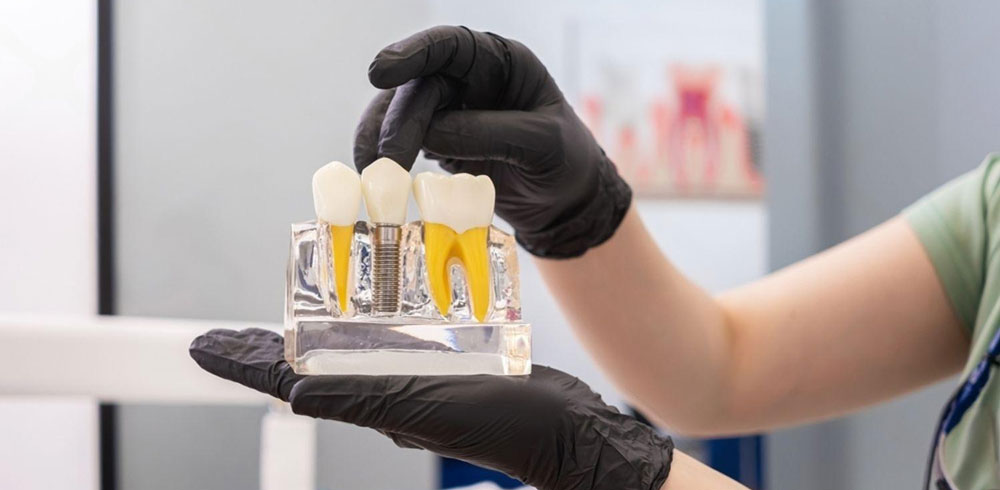
Tooth Implant Types by Material: Titanium vs. Zirconia
The material used to make a dental implant is another crucial factor, affecting everything from strength to aesthetics and biocompatibility. The two leading materials in modern dentistry are titanium and zirconia (a type of ceramic).
Titanium Dental Implants
For decades, titanium has been the gold standard for dental implants. It is a biocompatible metal, meaning it is not harmful to living tissue, and it is exceptionally strong and durable. Its key advantage is its proven ability to fuse with bone in a process called osseointegration, creating a rock-solid anchor for the replacement tooth.
Zirconia/Ceramic Dental Implants
As a metal-free alternative, zirconia (a type of high-strength ceramic) has grown in popularity. Its tooth-like colour offers an aesthetic advantage, particularly for patients with thin gums where a metal implant might be visible. Clinics that specialise in holistic dentistry often provide solutions for patients with metal sensitivities, such as the Straumann® PURE Ceramic implant system. For a more detailed look at this option, you can read our complete guide to ceramic tooth implants.
Exploring Different Types of Implants by Size
Beyond placement and material, implants also vary in size to fit different clinical situations. The two main size categories are standard and mini.
Standard Implants: These are the conventional, full-sized implants used in the majority of cases. Their robust diameter provides maximum strength and stability for supporting single crowns, bridges, or full arches of teeth.
Mini Dental Implants (MDIs): Significantly narrower than standard implants, MDIs are often used in situations where space is limited or as a less invasive option. They are primarily used to stabilise a lower denture, providing a more secure and comfortable fit than traditional adhesives.
Alternative Implant Techniques for Bone Restoration
If your jawbone is not able to support dental implants, several techniques can be used to rebuild bone, restore your natural jawline and provide a sturdy foundation for implant-supported teeth. These include:
Bone Augmentation
This involves restoring or regenerating bone in your jaw when it cannot otherwise support implants. Research shows that using bone additives and growth factors to fortify the bone generally achieves the best results.
Sinus Lift
Also known as sinus augmentation, this procedure involves adding bone below the sinus in the upper jaw, specifically in cases where the natural bone has deteriorated due to missing upper back teeth.
Ridge Expansion
If your jaw isn’t wide enough to support dental implants,4 a small ridge can be created along the top of your jaw and filled with bone graft material to increase its width and create a solid foundation.
How to Choose the Best Type of Dental Implants
Treatment predictability is crucial for the success of dental implant placement and restoration. To achieve predictable, long-lasting outcomes, several key factors must be carefully considered.
The Critical Role of a Professional Consultation: Every patient presents with unique clinical needs. A personalised treatment plan is essential for the best functional and aesthetic outcomes. This starts with an accurate assessment and diagnosis. A thorough evaluation during the diagnostic phase, often using 3D imaging, helps identify any factors that could lead to complications and ensures they are addressed early on.
Key Factors for Predictable Success: The long-term success of an implant depends on more than just a good diagnosis. The selection of the implant system is critical, taking into account its design, biocompatibility, and surface characteristics. Furthermore, the surgical technique chosen by the clinician and the final design of the restoration (the crown, bridge, or denture) are vital for a successful outcome.
Post-Placement Maintenance: The journey doesn’t end after placement. Ongoing maintenance is crucial for the long-term success of your implant. Educating patients on proper care at home and ensuring the implant site remains clean and accessible will help minimise the risk of complications like peri-implant disease.
Frequently Asked Questions (FAQs)
What are the 3 main types of dental implants?
The three main types are typically categorised by their placement: Endosteal (in the jawbone), Subperiosteal (on the jawbone under the gum), and Zygomatic (in the cheekbone).
What is the best type of dental implant?
There is no single “best” type for everyone. The best implant depends on individual factors like your jawbone density, overall health, location of the missing tooth, and aesthetic goals. A thorough consultation is needed to determine the optimal choice for you.
What are dental implants made of?
Most dental implants are made from either titanium, which is a highly biocompatible and strong metal, or zirconia, which is a tooth-coloured, metal-free ceramic known for its excellent aesthetics.
Is a ceramic or titanium implant better?
Both are excellent materials. Titanium has a longer track record of success and is known for its strength. Ceramic (Zirconia) is ideal for patients with metal sensitivities or those who prioritise the most natural-looking aesthetics, especially at the front of the mouth.
Can I get a dental implant if I have bone loss?
Yes, in many cases. For moderate bone loss, procedures like bone augmentation or a sinus lift can rebuild the jaw. For severe bone loss in the upper jaw, specialised Zygomatic or Pterygoid implants can often be used, avoiding the need for grafting altogether.
Is the dental implant procedure painful?
The procedure is performed under local anaesthesia, so you should not feel any pain during the placement. Most patients report that the post-operative discomfort is manageable with over-the-counter pain relief and is often less than what they experience after a tooth extraction.
Summary & Key Takeaways
This guide has covered how implants are categorised by placement (from endosteal to zygomatic), their primary materials (titanium vs. ceramic), and size variations like mini implants. We also reviewed the advanced bone grafting techniques that make treatment possible for more patients.
Understanding these core differences is the first step toward a restored smile.
Here are the key takeaways from this guide:
- Implants are mainly categorised by placement (Endosteal, Subperiosteal, Zygomatic), material (Titanium, Ceramic/Zirconia), and size (Standard, Mini).
- Endosteal implants are the most common type and are placed directly into a healthy jawbone.
- Titanium is the traditional gold standard due to its strength and ability to integrate with bone, while Zirconia offers a metal-free, aesthetic alternative.
- Advanced options like Zygomatic and Pterygoid implants, along with techniques like bone augmentation and sinus lifts, can make treatment possible even in cases of severe bone loss.
- The success of any implant treatment is not just about the type of implant used. It relies heavily on an accurate diagnosis, a skilled surgical technique, the choice of implant system, and diligent post-placement care.
Ultimately, the goal of any dental implant procedure is to provide a fixed, comfortable, and convenient solution that closely mimics the appearance and function of natural teeth.
Working with an experienced dental implant specialist is key to choosing the right implant. By considering your jawbone health, aesthetic goals, and budget, you can begin a treatment journey to restore your oral function and confidence for years to come.
Begin Your Smile Journey with Our Experts
As specialist implant dentists in London with hundreds of perfect 5-star reviews, the Dental Artistry team combines over 50 years of experience with the latest technology. Our comprehensive, in-house approach ensures predictable, world-class results from diagnosis to final placement.
We specialise in a full range of treatments, from leading Straumann and Biohorizon systems to advanced metal-free ceramic implants and “no-bone solutions” like zygomatic and pterygoid implants.
Book your comprehensive consultation at Dental Artistry today and take the first step towards a permanent, lasting smile.




You must be logged in to post a comment.